
Whelping & Neonatal Care
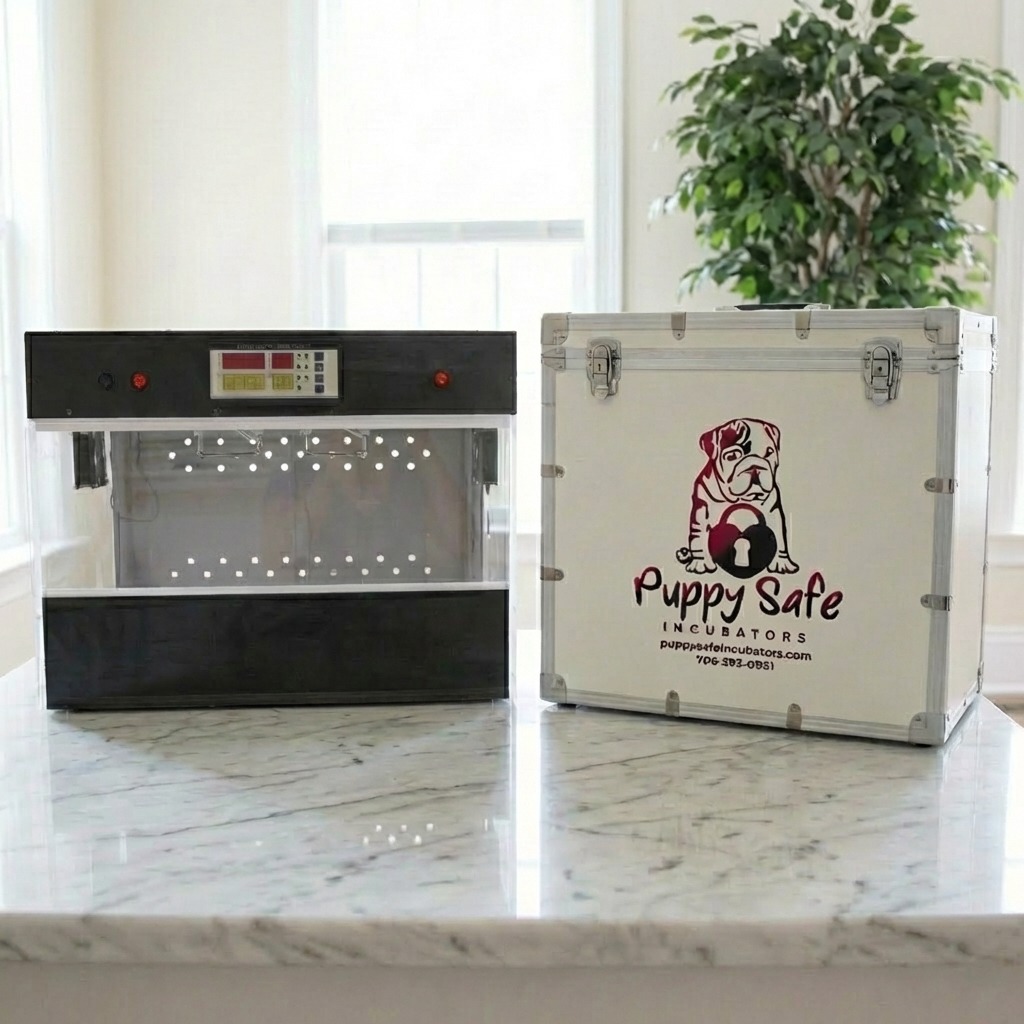
A puppy incubator with oxygen is one of the most important tools a dog breeder can have during whelping and neonatal care. Whether you are raising French Bulldogs, English Bulldogs, Boerboels, Mastiffs, or any other breed, a dog incubator for puppies helps provide controlled heat, humidity, airflow, and oxygen support during the most critical moments of a puppy's life.
A Puppy Safe® incubator set-up is designed to help breeders stabilize weak puppies, support recovery after birth, reduce stress after labor, and create a safer environment for newborns that need extra care. Below are 40 real situations dog breeders use a puppy incubator set-up.
One of the most common uses is immediate stabilization right after whelping. Breeders dry and stimulate the puppy first, then place them into an incubator to regulate body temperature before returning them to mom.
Some puppies are born alive but quiet or less active. A dog incubator with oxygen gives these puppies a warm, controlled recovery space to improve before nursing—often making the difference in survival.
Newborns chill fast. A heated incubator brings them back to a safe thermal range safely compared to household heat alone, stopping the dangerous cycle of cold puppies refusing to nurse.
The move from uterus to the outside world is stressful. A puppy warmer incubator eases the transition by providing warmth, airflow, and stability as they learn to breathe and adapt.
The first few days are fragile. A breeder incubator is used to give closer observation, extra warmth, or a safer place to recover securely between nursing sessions.
Puppies that weaken, stop nursing, or cool down need immediate support. Heat, humidity, and oxygen play a major role in stabilizing fading puppies while further care is administered.
Even healthy puppies can drop in temp if the room cools or they are separated. An incubator provides a fast, controlled solution to prevent severe chilling.
Some breathe slowly after a difficult labor or fluid exposure. An incubator with oxygen allows the breeder to support them in a controlled environment while monitoring recovery.
Long or stressful births leave puppies depleted. Heat and oxygen help puppies recover from physical strain by reducing environmental stress and supporting steady oxygenation.
When immediate supportive care is needed while preparing for the vet, an oxygen incubator gives breeders an emergency management tool during those critical minutes.
Puppies delivered by c-section are often wet and affected by anesthesia. A heated incubator with oxygen keeps them warm and recovering smoothly as they wake up.
Even natural births can exhaust puppies. A dog incubator offers warmth, rest, and controlled support for quick recuperation.
If the dam labored for hours, puppies may emerge stressed. Breeders utilize incubators so these specific puppies can adjust and regain strength in total safety.
Puppies exposed to long contractions are slower to respond. Setting them in a warm oxygen environment is far safer than leaving them in a drafty room to recover.
When manual help is required during extraction, puppies benefit heavily from immediate recovery time in heat and humidity before being placed on the dam.
Weak puppies that cannot latch need a supportive incubator. It conserves the puppy's energy so they aren't burning strength just trying to stay warm.
If a puppy roots around but fails to latch, breeders place them in the incubator between attempts so the puppy stays warm and stable rather than declining.
Runts need more support than littermates. An incubator offers a safe environment for recovery allowing breeders to rotate the runt in and out for dedicated feeding.
When weight gain stalls, preventing chilling and stress is vital. A newborn incubator stabilizes their environment, supporting energy conservation and feeding.
After tube or syringe feeding, keeping puppies in a heated incubator keeps them comfortable and digesting safely while their core body temperatures are maintained.
If exposed to canine herpesvirus, keeping puppies from chilling is mandatory. Maintaining proper consistent incubator warmth is one of the most important defenses.
For distress or congestion, an incubator equipped with oxygen and a nebulizer provides supportive care seamlessly in a tightly controlled environment.
Puppies fighting illnesses struggle more if they must manage cold stress. Incubator support gives them a much better chance by removing environmental hurdles.
All newborns have weak immune systems, but some are extra fragile. An incubator drastically reduces exposure to room drafts and dangerous temperature swings.
While receiving fluids, medications, or nebulizing, the incubator safely stabilizes the puppy throughout the stressful treatment process.
Large litters exhaust the dam and crowd puppies. Breeders use incubators to safely rotate puppies, keeping half warm while the other half nurses.
To watch a single puppy closely, the incubator provides a safe temporary zone that still actively supports their temperature and recovery.
Orphans require intensive external support. The heat and humidity of a quality incubator replicate the environmental stability the mother normally provides.
If a dam rejects one puppy, the heated incubator stabilizes and manages the puppy perfectly between supplemental feedings and supervised mom time.
A portable incubator safely transports fragile puppies to the veterinary clinic, maintaining the critical temperature control needed during movement.
If a puppy aspirates fluid, they must be watched. Oxygen incubators are heavily utilized here to provide warmth and recovery space during the monitoring phase.
After airways are cleared, puppies are extremely weak. Heat and oxygen prevent chilling and ensure smooth post-resuscitation recovery.
Not every puppy is born loud and vigorous. Those slow to cry or fully wake up benefit from immediate incubator time before rejoining the active litter.
Puppies experiencing cord-related stress or delayed transition can be placed in an incubator to effectively stabilize their vitals in the aftermath.
Premature puppies cannot regulate heat or tolerate stress. An incubator is absolutely essential to manage their severe sensitivity and instability.
If a puppy chokes during assisted nursing, putting them into the incubator allows them to recuperate peacefully in a quiet, reliably stable space.
Puppies with low tone tire very easily. The incubator ensures they do not burn energy just trying to stay warm, letting them focus entirely on strength.
Bulldog and heavily managed breeds utilize incubators routinely even when things appear completely normal. Proactive neonatal care prevents reactive emergencies.
Many breeders place fragile puppies in the incubator overnight. This prevents accidental crushing by the dam, chilling, and missed warning signs.
A weak puppy might not be ready for the whelping box full-time. The incubator houses them safely between supervised nursing sessions until they develop necessary strength.
A basic puppy warmer only provides raw heat. A true puppy incubator with oxygen, humidity, and active airflow provides a complete critical neonatal care environment. A dog incubator for puppies is not just for emergencies—for many breeders, it becomes part of the normal whelping system!
From warming newborn puppies and helping weak puppies recover to supporting oxygen use after hard labor, a puppy incubator gives breeders more control, and more confidence.